01
01Where to begin
Find your topic
Anxiety, family, self-esteem, boundaries and more: begin with what you are living through.
Explore topicsA relationship you felt was forever has ended. Unification helps you recover the love you gave and enjoy your day again.
This might sound familiar
What it's about
When a relationship ends, the mind repeats the same story: what you did wrong, why they left, whether there will be anything better. Isha explains it with a simple image: that story leaves a groove, and you keep falling into it out of habit. Walking through it, something else appears: the love you felt came from you, and it is still in you even though the relationship has changed form. Unification gives you a short practice to return to that place each time the story shows up, and so your day becomes yours again.
Appreciating what you lived is the cleanest way to let it go.
One phrase, a few minutes, and you return to your day.
What you offered outward starts to stay with you too.
A practice to start with
This is a first Unification practice, the same one Isha suggests when the mind gets hooked on a relationship that ended. It takes a few minutes:
In Isha's words
What you'll notice
You recognize the story sooner and come back faster.
Without it tying you to anyone.
Moments you enjoy again, even if they're few at first.
Something simple for when the absence weighs.
Start today
Leave us your email and we'll send you a practice for the days when your mind keeps going back to the same story.
Free, no spam. You can unsubscribe whenever you want.
Keep exploring
After signing up, choose the next step that best fits what you need today.
01Where to begin
Anxiety, family, self-esteem, boundaries and more: begin with what you are living through.
Explore topics 02
02The practice
Discover the facets and how a simple practice can become part of everyday life.
Discover UnificationMexico center
The center where the retreats in Mexico take place, with teachers and community holding the practice.
Discover the centerUruguay center
A retreat house on the Río de la Plata, an hour from Montevideo, to go deeper without the noise.
Discover the center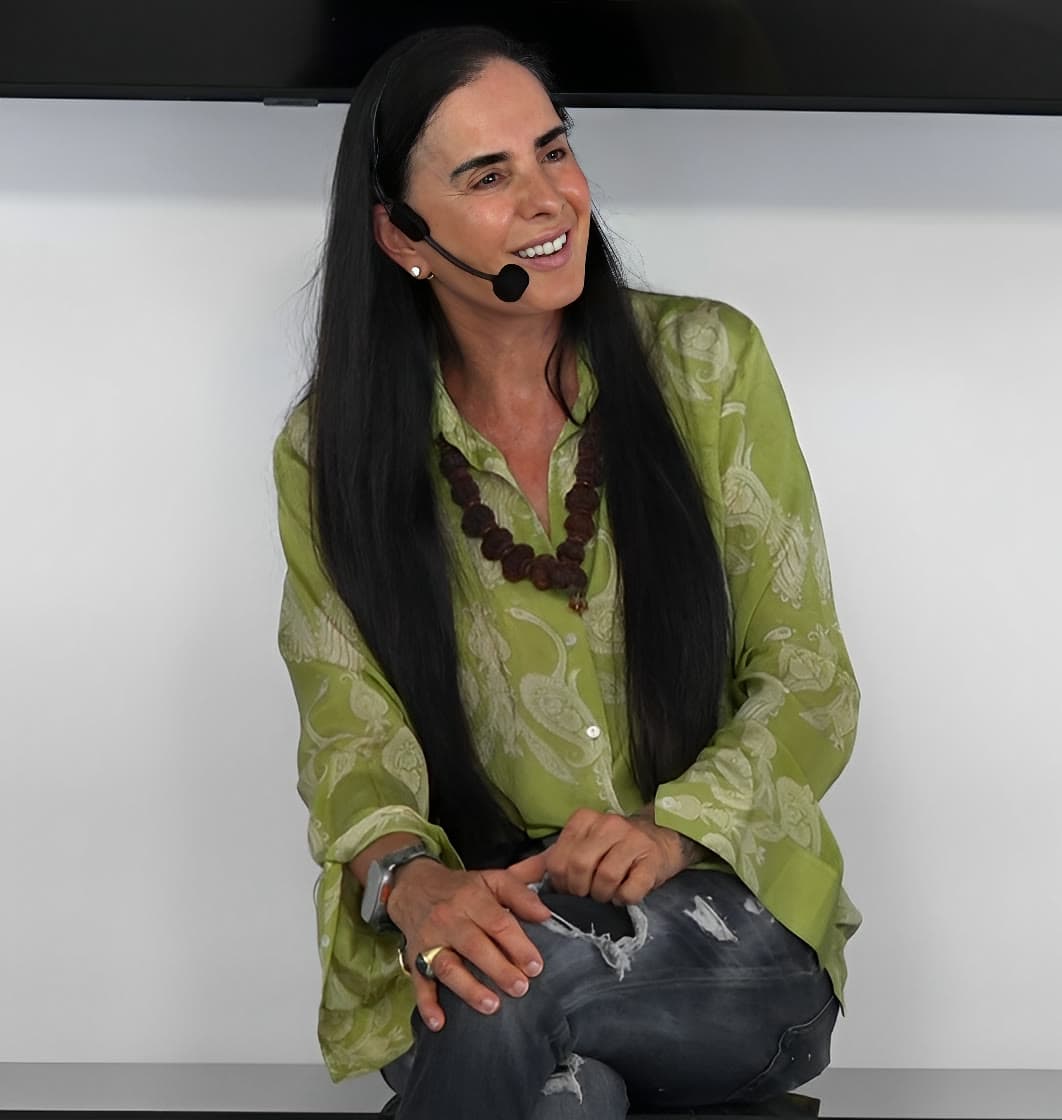 05
05The creator
Spiritual teacher, author and speaker. She created Unification 25 years ago: love for oneself as the ground of a peaceful humanity.
Testimonials
Katka shares what Unification gave her in the middle of a separation.
Stories
“I'm right in the middle of a separation, and Unification gave me this feeling that I can do anything.”
Keep going
Read about it
Reflections to accompany these days.
Questions
You can start with something smaller than moving on: appreciating what was. That sentence, they were the one for me and there will be nothing better, is one of the most common in the first weeks, and it holds some truth: what you lived was real. What the sentence confuses is where that love came from. It came from you. The person left, and the love you felt is still yours, even if right now you don't know where to take it. Isha suggests appreciating what you had and letting it go, and then giving yourself all the love you used to give. It doesn't happen in a day: it happens each time the story comes back. In What Unification is you'll find the practice that supports that return.
Because the mind goes back, out of habit, to what it knows. Isha describes it as a groove: a relationship that ended leaves a marked path, and the mind walks it again and again with the same questions, what did I do wrong, why did they leave, what are they doing now. Thinking about it more brings no new answers, and it takes you out of your day. What helps is recognizing the moment you've entered the groove, without fighting it, and coming back to yourself with a short practice. Over time the groove gets shallower and the story shows up less. Isha works on this in How to begin letting go of attachment.
Yes, and it often comes from everything you gave. You loved a lot, you cared a lot, and the other person left: anger shows up as a way of demanding that this be seen. Isha looks at it directly in her talk on resentment: what the other person sees or doesn't see changes nothing in you, and what does change things is that you begin to appreciate yourself. Letting go of anger doesn't ask you to forgive today or to be anyone's friend. It asks you to stop carrying it. If anger is what weighs most these days, in Contained anger you'll find a practice made for that.
When the sadness holds for weeks and the basics become hard: sleeping, eating, working, looking after your children if you have them. Asking for support at that point is care, never weakness. And if there was control, violence or real fear in the relationship, or there still is, that needs specialized help and your close circle as soon as possible. Unification is a wellbeing practice and doesn't replace care from a mental health professional: they can go together, one gives you a daily tool and the other an expert space for what you're going through.

Start today with a simple practice for the days when the story comes back.