01
01Where to begin
Find your topic
Anxiety, family, self-esteem, boundaries and more: begin with what you are living through.
Explore topicsYou lose your patience with your children and then you regret it. Unification gives you back the place from which to be present with yourself and with them again.
This might sound familiar
What it's about
You are there all day: meals, school, homework, bedtime. And still there is that strange feeling of not having been there. It isn't a lack of love or of time: you arrive scattered, with your mind solving tomorrow while your body does today. The practice doesn't ask you to add hours to a day that is already full. It invites you to come back to yourself first, because the connection with you is the same connection with them. When that happens, the time you already have changes in quality, and that is what reaches them: not how many hours you were there, but how much of you arrived.
The house doesn't have to be silent.
It's the same road that takes you back to them.
A short while, truly present, settles the day.
A practice to start with
This is a first Unification practice. It takes a few minutes, it doesn't need a quiet house and it asks you neither to arrive calm nor to feel anything in particular:
Start here
"Being truly present with yourself and with them": the first thing you can do when the day slips away and you feel you never arrived, straight to your inbox.
You can unsubscribe whenever you want.
Keep exploring
After signing up, choose the next step that best fits what you need today.
01Where to begin
Anxiety, family, self-esteem, boundaries and more: begin with what you are living through.
Explore topics 02
02The practice
Discover the facets and how a simple practice can become part of everyday life.
Discover UnificationMexico center
The center where the retreats in Mexico take place, with teachers and community holding the practice.
Discover the centerUruguay center
A retreat house on the Río de la Plata, an hour from Montevideo, to go deeper without the noise.
Discover the center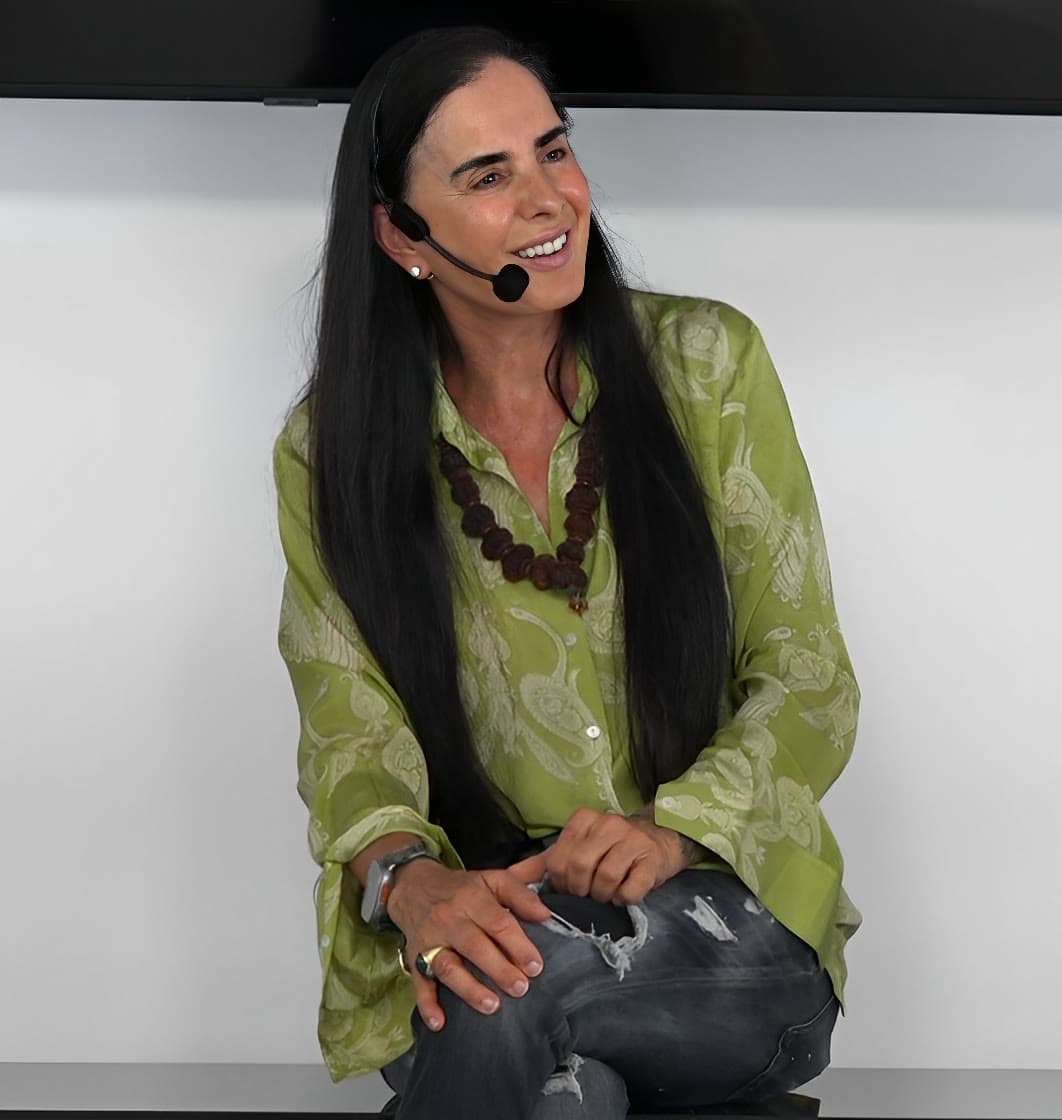 05
05The creator
Spiritual teacher, author and speaker. She created Unification 25 years ago: love for oneself as the ground of a peaceful humanity.
Testimonials
Real people sharing their experience with Unification.
Voices from the practice
“I needed my children's approval to feel good. Now we have a truer relationship.”
“I'm going home reconciled with my parents, my sister, my whole family.”
Reading
Questions
Losing your patience doesn't make you a bad mother: it happens when you are exhausted and you have spent hours holding everyone. The guilt that comes afterwards usually hurts more than the shouting, and it leaves you with even less for the next moment. What the practice offers is not putting up with more, it is arriving with something inside. When you have a few minutes of your own in the day, the same mess or the same comment doesn't find you at your limit, and that small distance is what changes the reaction. It isn't about promising yourself you will never shout again, because that puts you back in the place of the problem. It is about having something between what happens and what you do. What usually changes first is not the count of good days, it is the quality of the time you share: you arrive less scattered and they feel it. And when it happens again, there is a place to come back to.
There are twenty minutes that stay with a child for years, and they are almost never part of a special plan. They are washing the dishes together while they tell you something from recess, or the walk to school without looking at your phone. Children don't measure the clock, they measure presence: they notice right away whether you are there or whether your head is still somewhere else. That is why a whole afternoon in the same room can leave them feeling you weren't around, and a short while can stay with them for a long time. What tends to settle this is not rearranging the schedule, it is what you bring with you when you arrive. When you come less scattered, the same everyday moment becomes something else, without anyone having to do anything different. And if today it doesn't happen, tomorrow there is another walk to school.
You haven't lost anything: you expanded your capacity to love, and that takes up a lot of space at the beginning. What usually happens is that such a big love takes almost all of your attention, and for a while it is hard to find the place where you used to be. It isn't that you are gone: you are there, inside this new life. The practice doesn't ask you to choose between them and you, because they are not two separate things. It offers you a few minutes to come back to your centre, and from there many women say they recognise themselves again: their energy, their humour, their way of looking. There is also something about trusting. Trusting that this stage isn't forever, that they are growing and that you will still be there, more whole. Coming back to yourself takes nothing from them: it is exactly what reaches them most.

Start today with a simple practice you can do in your own home.