01
01Where to begin
Find your topic
Anxiety, family, self-esteem, boundaries and more: begin with what you are living through.
Explore topicsYou are always last on your own list, and by the time your turn comes the day is gone. Unification helps you put yourself first again and reconnect with what you enjoy.
This might sound familiar
What it's about
You give all day: to your family, to your work, to whoever needs you. And that is fine, until you notice that what you hand out comes from a place nobody refills. When you give yourself nothing, you keep giving anyway, but you give from exhaustion, and then something appears that almost nobody names: you end up resentful towards the people you love. Your first responsibility is you, and not as one more demand: as the place from which there is later enough for everyone. Maybe today the question is a simpler one. What if the next person you put first is you?
No special posture, no absolute silence.
You start telling what you want from what you have to do.
Short, yours, inside the real day you have.
A practice to start with
This is a first Unification practice. It takes a few minutes and doesn't ask you to stop caring for anyone or to get the day in order first:
Start here
"Putting yourself first again and reconnecting with what you enjoy": the first thing you can do when you always end up last on your list, straight to your inbox.
You can unsubscribe whenever you want.
Keep exploring
After signing up, choose the next step that best fits what you need today.
01Where to begin
Anxiety, family, self-esteem, boundaries and more: begin with what you are living through.
Explore topics 02
02The practice
Discover the facets and how a simple practice can become part of everyday life.
Discover UnificationMexico center
The center where the retreats in Mexico take place, with teachers and community holding the practice.
Discover the centerUruguay center
A retreat house on the Río de la Plata, an hour from Montevideo, to go deeper without the noise.
Discover the center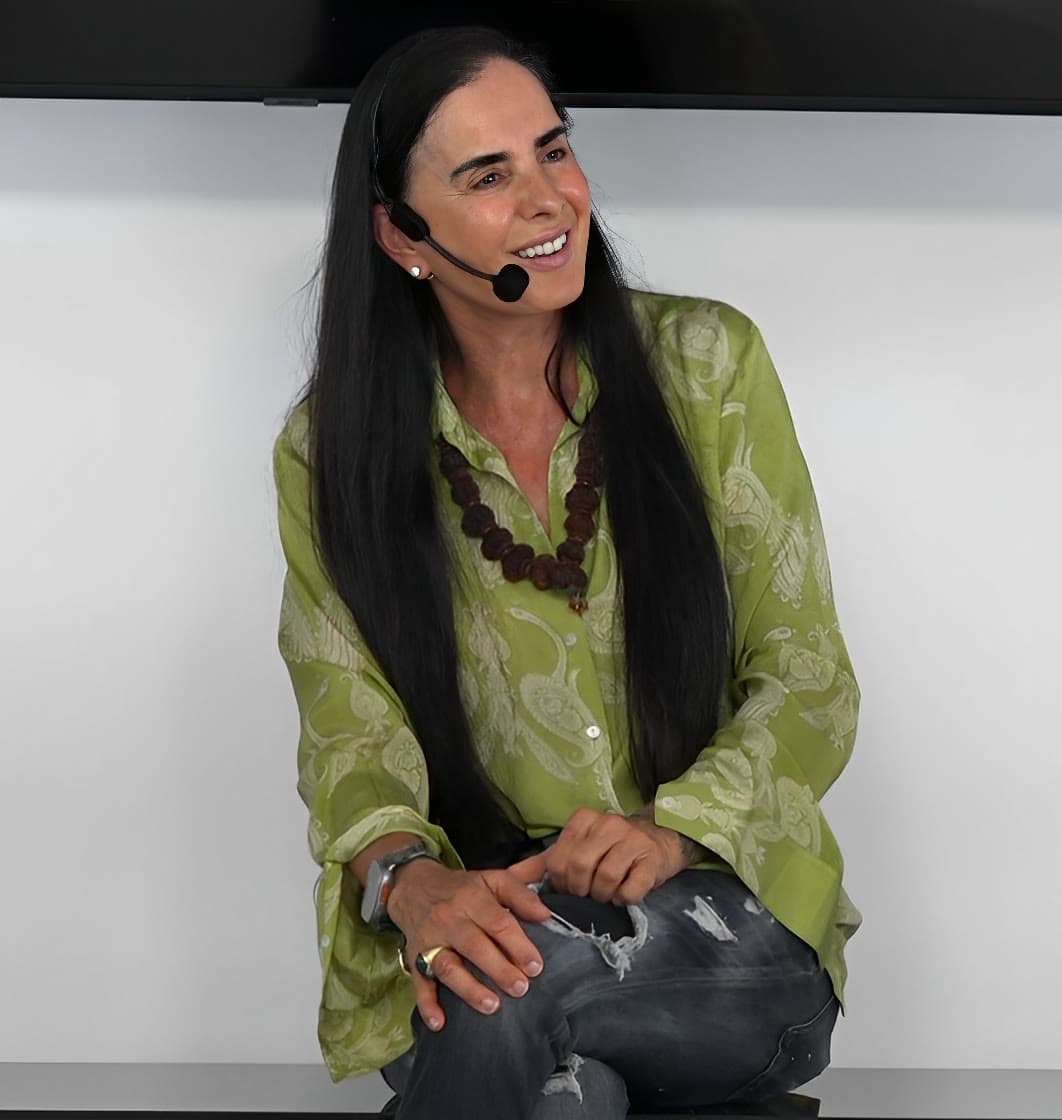 05
05The creator
Spiritual teacher, author and speaker. She created Unification 25 years ago: love for oneself as the ground of a peaceful humanity.
Testimonials
Real people sharing their experience with Unification.
It happened to someone like you
“I had abandoned myself my whole life: abandoned in doing, not in being.”
“I was very violent with myself, full of judgment toward me.”
Questions
It is not selfish, and in practice it tends to be the opposite. It can sound contradictory when people depend on you, and even so it is what tends to show most in the way you treat them day to day. Keeping a little time for yourself takes nothing away from anyone, and it tends to change the quality of what you offer afterwards. And it doesn't have to be long: what changes isn't the amount of time, it's that it exists at all. Many people notice that from there everything else settles differently: they listen better, they answer with more patience, they stop keeping score of all they did for others. The practice does not ask you to stop caring. It offers something simpler: that your name also appears on the list of people you attend to every day, even if at first it is only a few minutes.
A few minutes are enough to begin, and that is precisely the point: you do not need to clear your calendar or wait for the year to ease off. It is worth looking at something slightly uncomfortable: only you can give yourself the time and the place you feel nobody gives you. Nobody will show up offering you that moment, because from the outside it looks like you are available. The practice is built for the real day you have, not an ideal one: a few minutes, no special posture and no absolute silence, in the car before walking in, after dropping off the kids, at night when the house turns its volume down. What sustains the change is not how long it lasts, it is that the time is yours and that you keep it. Many people find that booking it like any other commitment is what stops it from moving.
Guilt often shows up, and it does not mean you are doing something wrong. It usually means the opposite: that the order has been inverted for a long time and that taking a place in your own life still feels foreign. You do not need to argue with that guilt or convince it. With the practice it loses volume on its own, because the idea holding it up, that you are only worth what you do for others, stops being the only thing you can hear. At the beginning it can help if the time is short and concrete, something that takes nothing away from anyone, so guilt has nothing to hold on to. Over time many people notice a simple and very visible change: they keep a fixed time for themselves, without asking permission or explaining. None of this is a cure or a promise: it is a tool for coming back to yourself.

Start today with a simple practice you can take anywhere.