01
01Where to begin
Find your topic
Anxiety, family, self-esteem, boundaries and more: begin with what you are living through.
Explore topicsYou lost someone and you don't know how to go on. Unification offers you a steadier place inside for the days when everything weighs.
This might sound familiar
What it's about
Outside, the world kept going as if nothing had happened. Inside it doesn't work that way: grief is not a problem to solve, it is something you walk through, and it comes in waves that give no warning. There is no right way to do it, and what holds you today may not hold you tomorrow. The practice doesn't come to hurry you or to tell you it's time: it gives you something steady to lean on when the day doesn't hold. Many people say that, over time, they can talk about that person again without breaking.
A few minutes, no special posture, no absolute silence.
Without correcting it or rushing it away.
At your own pace, asking nothing of yourself.
A practice to start with
This is a first Unification practice. It doesn't try to stop you missing them or to speed anything up: it just keeps you company while you are there.
Start here
A short email with the ways to keep going at your own pace, for whenever you want to take another step. No rush.
You can unsubscribe whenever you want.
Keep exploring
After signing up, choose the next step that best fits what you need today.
01Where to begin
Anxiety, family, self-esteem, boundaries and more: begin with what you are living through.
Explore topics 02
02The practice
Discover the facets and how a simple practice can become part of everyday life.
Discover UnificationMexico center
The center where the retreats in Mexico take place, with teachers and community holding the practice.
Discover the centerUruguay center
A retreat house on the Río de la Plata, an hour from Montevideo, to go deeper without the noise.
Discover the center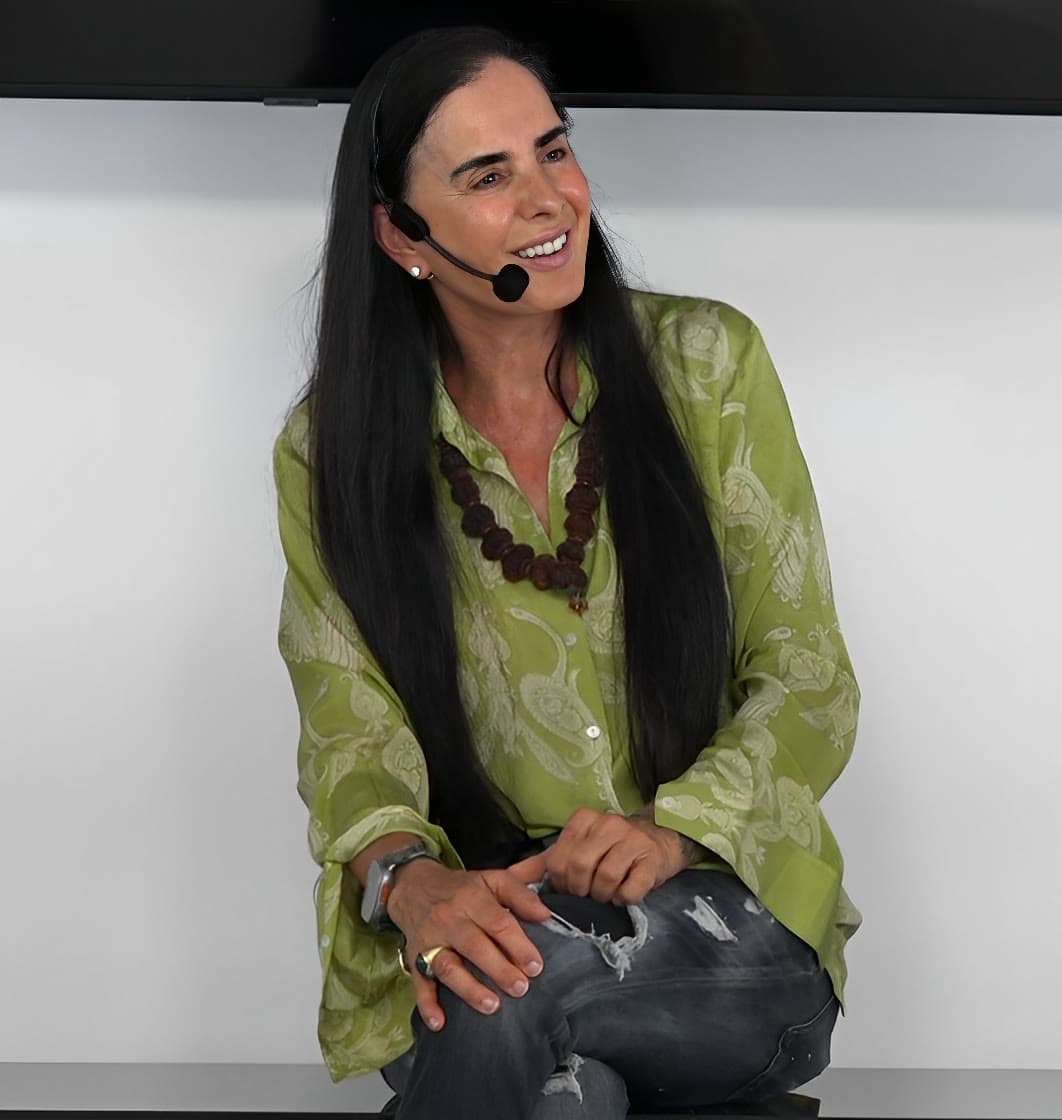 05
05The creator
Spiritual teacher, author and speaker. She created Unification 25 years ago: love for oneself as the ground of a peaceful humanity.
Testimonials
Real people sharing their experience with Unification.
Stories
“My husband passed away three years ago. I went to psychologists and grief counselors, and nothing filled the gap.”
“I lost my dad when I was very little and stayed sad with that. Today I can embrace every part of my experience.”
Questions
Grief has no deadline, and anyone who gives you a date is asking for something that doesn't depend on you. Some people feel back in their lives after a few months, and for others the second year weighs more than the first, and neither of them is doing it wrong. What usually changes is not the intensity of every day, it is the shape: at first it takes up all the space, and later it arrives in waves, often with no warning, with a street, a birthday or a film you used to watch together. That is why it helps less to ask how much longer, and more to ask what you need today. Going at your own pace is not falling behind: it is what lets you walk through something like this without leaving yourself outside. And if the pain becomes very hard to hold, looking for professional support is care, never weakness.
Many people say that over time they can name the person they lost without breaking, and not because they have forgotten anything. At first the memory and the pain arrive together, so close that saying their name out loud feels impossible, and so you start avoiding it: you change the subject, you don't look at the photos, you leave the room as it was. What loosens later is not the love, it is the urgency. One day a story comes up and you laugh before you notice, and that laugh betrays no one. There is no technique that hurries this along and no date on which it happens. There is something that accompanies you, and it is no longer fighting with what you feel each time it appears. Remembering without it hurting like this doesn't mean remembering less: it means the absence stops taking up every inch inside.
Unification doesn't come to take your pain away, nor could it, and promising you that would not be true. What it offers is a short practice of a few minutes, with no special posture and no absolute silence, that you can do sitting on the bed, travelling, or when the house goes quiet. This is not about getting over anything or turning the page: it is about what you feel having somewhere to be, instead of pushing it aside so you can get through the day. Some people say that this way the pain stops arriving like an emergency, and that after those minutes the day holds a little better. None of this replaces the support of a professional, and when grief becomes very hard to hold, asking for that help is one of the most loving things you can do for yourself.

We leave in your inbox the ways to keep going whenever you want. You open them the day you feel like it, at your own pace.