01
01Where to begin
Find your topic
Anxiety, family, self-esteem, boundaries and more: begin with what you are living through.
Explore topicsYou decide all day and get home with nothing left. Unification gives you back a steady place to lead from, without it costing you everything you have.
This might sound familiar
What it's about
Deciding is less tiring than it seems. What drains you is the noise around it: the conversation you replay inside, the decision you already made and keep justifying, the feeling of having to prove your judgement every time you walk into a room. That noise grows when you stop trusting yourself, and it settles when you trust yourself again. If you don't believe in you, it is hard for anyone else to: that is why the order is to validate yourself first. The practice doesn't ask you for character, and it doesn't add anything to your calendar. It gives you a steady place inside, and from there deciding costs you less.
Between one meeting and the next, no special posture, no absolute silence.
You tell what you think from what is expected of you.
And the conversation becomes shorter and clearer.
A practice to start with
This is a first Unification practice. It takes a few minutes and doesn't ask you to review what you decided or to solve anything else:
Start here
"Leading without emptying yourself": the first thing you can do when you hold everyone's energy except your own, straight to your inbox.
You can unsubscribe whenever you want.
Keep exploring
After signing up, choose the next step that best fits what you need today.
01Where to begin
Anxiety, family, self-esteem, boundaries and more: begin with what you are living through.
Explore topics 02
02The practice
Discover the facets and how a simple practice can become part of everyday life.
Discover UnificationMexico center
The center where the retreats in Mexico take place, with teachers and community holding the practice.
Discover the centerUruguay center
A retreat house on the Río de la Plata, an hour from Montevideo, to go deeper without the noise.
Discover the center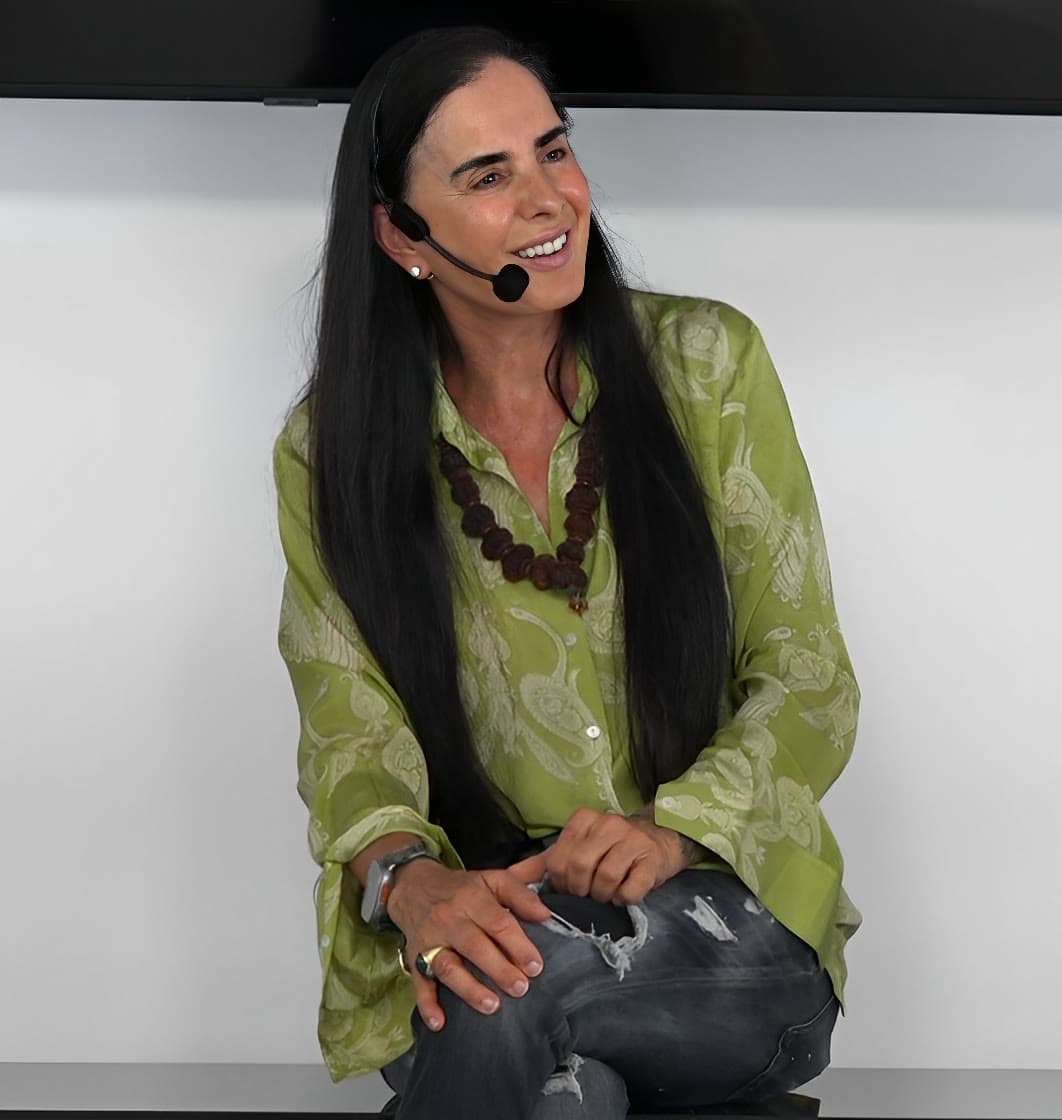 05
05The creator
Spiritual teacher, author and speaker. She created Unification 25 years ago: love for oneself as the ground of a peaceful humanity.
It happened to someone like you
“After 15 years I had the courage to apply for an important position. Before, I didn't believe in myself.”
“Being in charge, with my mind on too many things and the pressure of getting them right.”
“Unification changed the way I see my business and, above all, the way I see my own worth.”
Reading
Questions
A demanding week can hold together, and it doesn't depend on gritting your teeth harder. A demanding week holds together when your energy doesn't all go into the background noise: the conversation you go over twenty times in your head, the decision you already made and keep justifying, the meeting you rehearse before and review after. That noise consumes more than the working hours do. The practice is a short space, a few minutes, taken between meetings or before walking into one: it doesn't add a task, it gives you back a steady place to decide from. Over time many people notice they reach Friday with something still left inside, and that hard decisions no longer cost them the whole night. It is not the promise of a lighter week: it is that you arrive at the end of it differently.
Trust starts inside, and this is not a platitude: it is the actual order of things. If you don't trust your own judgement, every room asks you for one more proof, and you end up giving it. Something else weighs here too: a woman who decides firmly is still given names a man is not, and that reading gets inside you without an invitation. The practice doesn't change what other people think. It changes the place you walk in from. When you validate yourself first, outside validation stops being the requirement and becomes a consequence. The shift is quieter than it sounds, and it belongs to you rather than to the room. None of this happens overnight, and it is not a formula. Many people simply say they stopped over-explaining, and that their conversations became shorter and clearer as a result.
The first thing is to look at your own reserve, because a team reads the state of whoever leads it before it hears the words. If you arrive at the meeting empty, the team notices and goes on alert, however impeccable the message is. This is not about faking composure or carrying everyone by sheer effort. When you get something of your own back, a few minutes a day, your presence changes temperature, and that is noticed around you too: many say their team relaxes, asks more and takes charge of what is theirs. The practice is simple and asks for no special posture or absolute silence; you can do it at the office, in the car or before a difficult call. Over time, what many notice is that their worth becomes visible without announcing it, because it shows in how the team works around them.

Start today with a simple practice you can take anywhere.