 Mente
Letting go of control: tools to trust and live in peace
I
Isha Team

Living in the present begins when reality doesn't look like the plan you built in your head: it doesn't mean something went wrong, it's an invitation to let go of the comparison and look at what is happening right now.
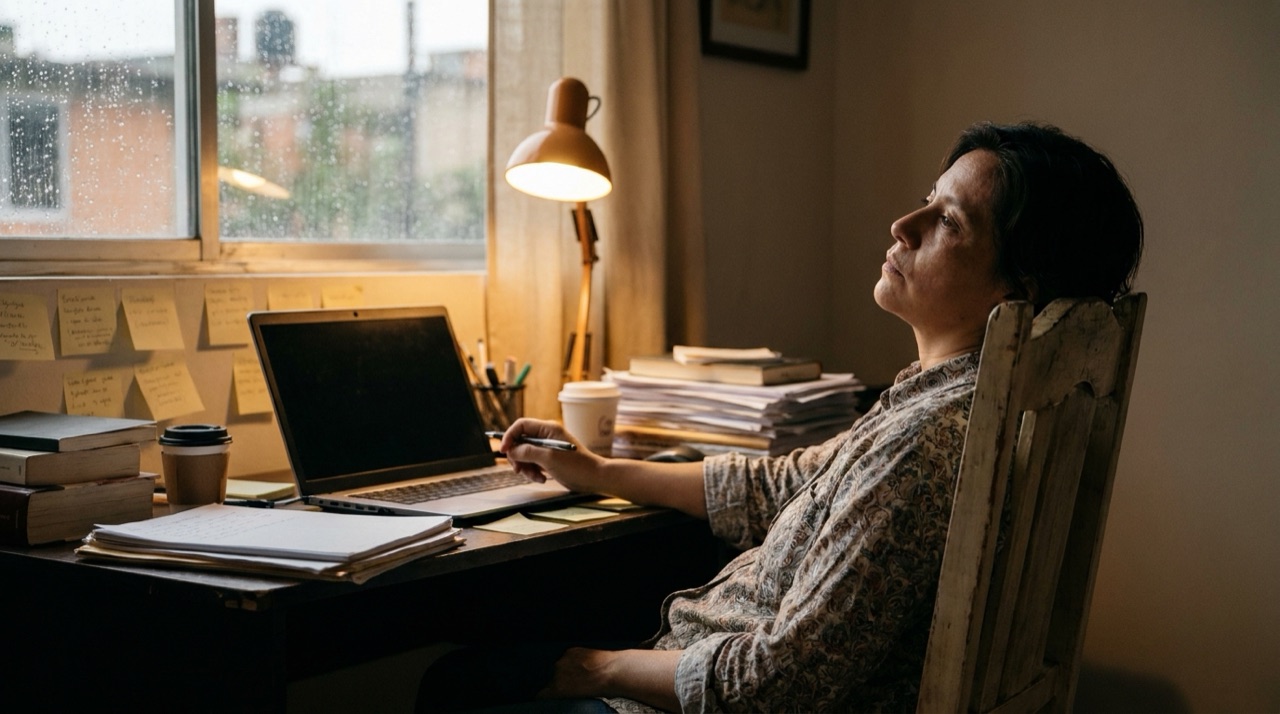
There is a very specific moment when the mind complains: this wasn't supposed to happen. Work didn't turn out the way you planned, the relationship took a different direction, the year looks nothing like the one you imagined in January. Living in the present starts with noticing that complaint and asking yourself something simple: am I looking at what's happening, or am I comparing it to a script I wrote all by myself in my head?
The mind writes scripts all the time: how the week should go, the conversation, the relationship, the body, the job. They're useful for getting organized, but they become a problem when we treat them as the only acceptable version of reality. When life veers away from that script, the first thing that shows up is usually the feeling that something went wrong.
Seen another way, that detour doesn't erase what is available right now. The day that didn't go as you planned still holds a possible conversation, a possible pause, a possible decision. What gets lost isn't the opportunity: it's your attention, busy comparing instead of looking.
Letting go of the comparison doesn't mean giving up on goals or pretending nothing matters. It means separating two things the mind tends to mix together: the fact that is happening and the story about how it should have been. The fact can be looked at, worked with, enjoyed or changed. The story can only be repeated over and over, without moving anything in reality.
When that separation becomes clearer, the present stops feeling like a consolation prize for the plan that didn't happen. It starts to look like the only place where there is truly something to do, feel or decide.
Isha Judd offers the Unification practice as a concrete path for that letting go: instead of resisting what is, you allow it, look at it head on, and let the mind lower its guard in the face of comparison. It isn't indifference or resignation. It's the possibility of meeting a situation just as it is, without the extra layer of "this should be different," and discovering options there that the same mind, busy comparing, couldn't see.
That idea appears in pieces like Descubriendo el poder del momento presente, which explores how sustained attention on what's happening now changes the way you live day to day, and in Entregándonos al momento presente, which expands on how to practice that letting go in order to live fully.
This reflection comes from a reel published by Isha Judd, available here, about letting go of the script the mind imagined for life.
You don't need to sort out your mind's whole relationship with the future in a single afternoon. Small, repeated gestures are enough:
If this idea speaks to you, Experimentar un presente en dicha offers another view of how that letting go feels in the body and in your mood, not just in your head.
Your life doesn't have to look like the script your mind wrote. It can simply be what is happening right now, seen head on.
FAQ
Living in the present means putting your attention on what is happening right now, instead of comparing reality to the script your mind had put together beforehand. It doesn't mean giving up on planning or dreaming; it means letting go of the fight when life takes a different path than the one you imagined, and looking closely at what is actually available in this moment.

Weekly newsletter with articles, retreat calendar, and the blog's most-read posts.
By subscribing you accept our Privacy policy.