 Mente
Why you go to bed exhausted and cannot fall asleep
I
Isha Judd

Isha Judd invites you to ask yourself, again and again, whether what feels urgent right now comes from the heart or from fear, so you can choose from consciousness and not from reaction.
Most advice on prioritizing talks about lists, matrices and planners: sorting tasks by urgency and importance to be more productive. They're useful for work, but they leave out the question that really weighs on your day: is what I'm giving my attention to right now important to me, or does it just feel urgent?
Isha Judd suggests looking at it differently. It's not about organizing the list better, but about checking, before you put something at the very top, where that sense of urgency comes from.
In a recent reel, Isha Judd sums it up in a single phrase she invites you to repeat every time something rushes you: «Is this so important to me? Really, really?». You can watch the full talk on Isha's YouTube channel.
It's not a question you answer once and settle forever. It's a filter you use again every time something claims your time, your energy or your attention: before deciding that it comes first, you ask yourself again whether it truly matters to you, or whether you're just reacting to what the people and things around you seem to demand.
The ego's urgency usually sounds like an alarm: it has to be now, if you don't do it you'll look bad, if you don't answer they'll get angry, if you don't get there first you'll lose something. That kind of urgency almost always comes with tension in the body and a story about what will happen if you don't act right away.
What matters to the heart feels different: it doesn't push, it invites. You can feel that something matters to you without the urgency of resolving it this very second. When you notice that difference (the tension of the alarm versus the calm clarity of what truly matters to you) you already have more information to decide what to attend to first.
This doesn't mean ignoring what's truly urgent when it really is. It means no longer treating every urgency as if it were automatically the most important thing, just because it arrived first or came with more noise. The same thing happens with other people's approval: in Stop seeking outside approval you can see how that urgency also tends to come from fear and not from what truly matters. How to be happy with yourself describes something similar about happiness: it also depends on where you put your attention, not on how many things you get done.
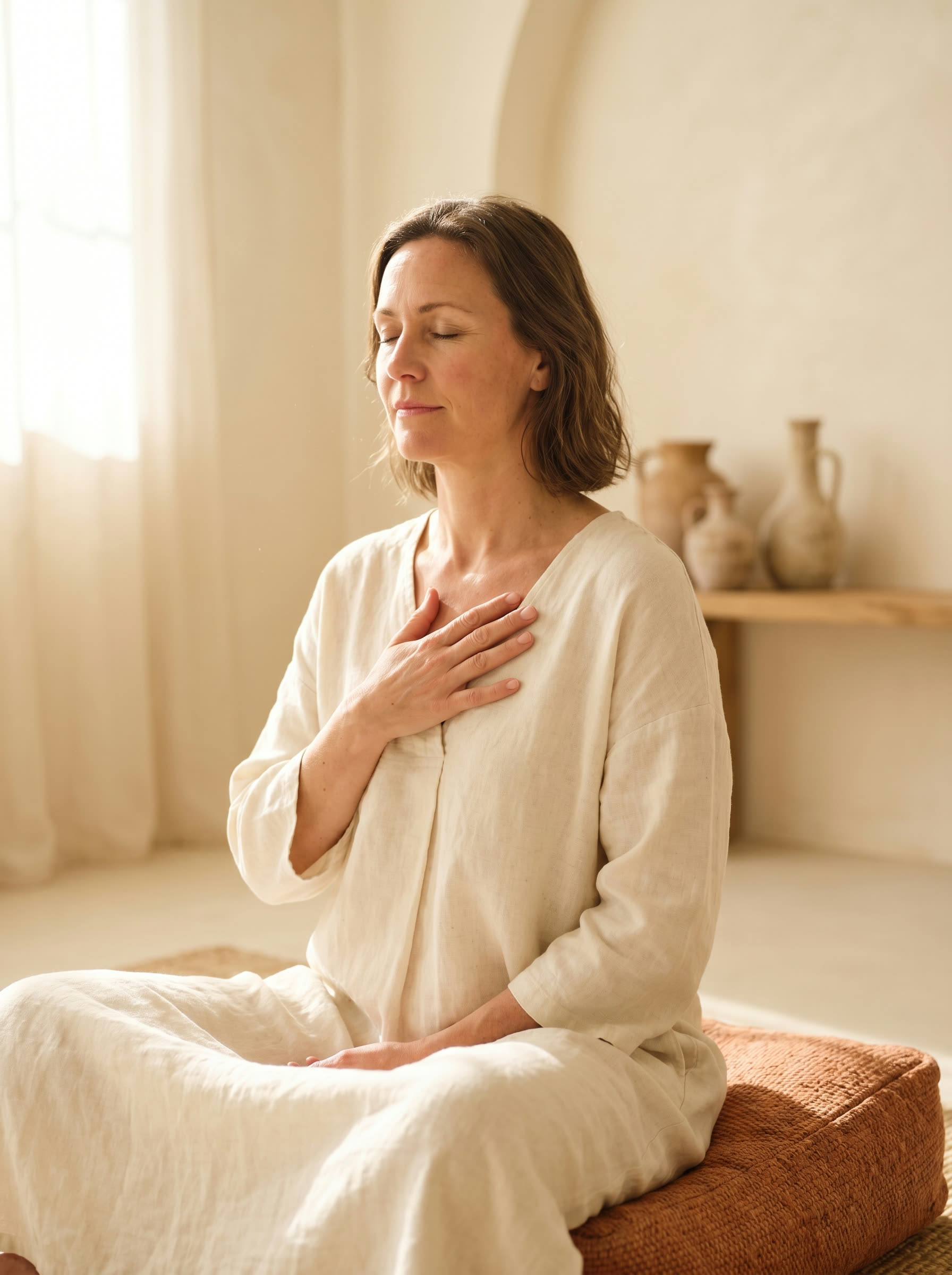
Understanding the difference with your mind helps, but holding on to it in the moment when several things feel urgent at once calls for something more concrete. Unification offers a simple, repeatable gesture: you think a facet, a short phrase that names a quality that's already yours, like «Love creates me in my perfection», and you bring your attention to your heart while you hold it.
When your mind goes back to the urgency (the unanswered message, the task that seems like it can't wait) you simply go back to the facet and the heart. From there, a little calmer, you ask yourself the question again: is this so important to me, really, really? Sometimes the answer will still be yes. Other times you'll notice that what seemed urgent could actually wait.
When you choose what matters from consciousness and not from reaction, your day doesn't necessarily have fewer things in it, but it has fewer things that weren't yours. You stop filling your time with borrowed urgencies and start noticing what you truly want to hold on to.
This doesn't mean becoming indifferent to what's happening around you either. It means that, before reacting, you give yourself the space to ask. And each time you repeat that question, it gets a little easier to tell the ego's alarm apart from what truly matters to the heart.
What would happen if, the next time something feels urgent, you paused for a few seconds, thought your facet and asked yourself again whether it's so important to you, really, really? Send us ELIJO by DM or in the comments if you'd like to go deeper into this practice.
This same pause takes on another meaning when you look at it in light of the time you have: Living fully: what changes when you know you're going to die explores why remembering that life is limited helps you stop putting off what truly matters.
FAQ
The first step isn't putting a list in order, it's noticing what is asking for your attention and asking yourself where that request comes from. How to tell the ego's urgency apart from what truly matters to the heart explores this distinction in more detail.
Weekly newsletter with articles, retreat calendar, and the blog's most-read posts.
By subscribing you accept our Privacy policy.