
 Conciencia
Retreat and course calendar: upcoming personal growth retreats
I
Isha Team

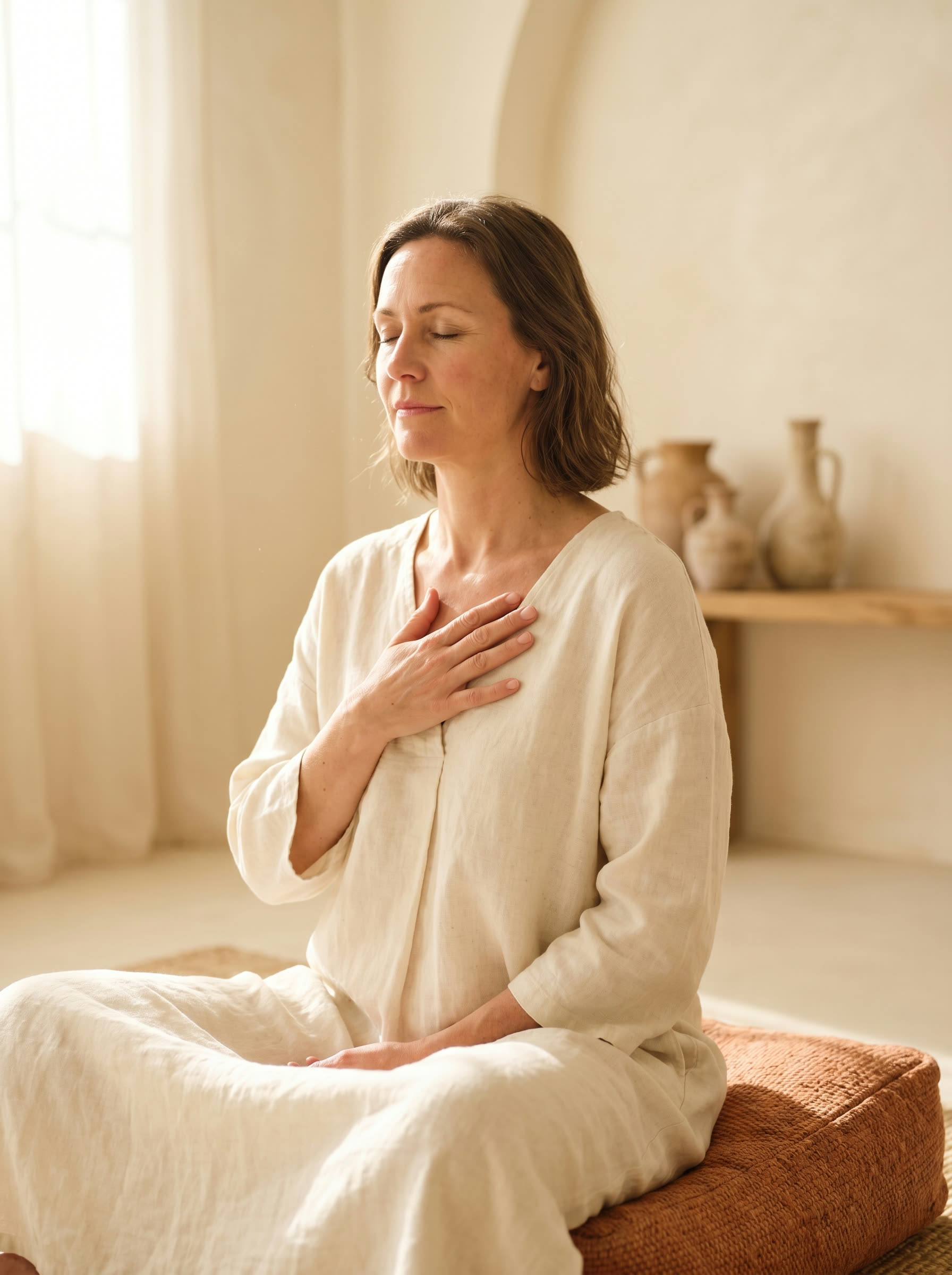
Slowing your breathing and anchoring your senses helps, but there's a third step few guides mention: bringing your attention to your heart. Here it is in full.
Anxiety arrives like a wave: your chest tightens, your mind speeds up and suddenly everything feels urgent even though nothing has really changed. The first thing worth knowing is that this reaction makes sense: it's your body responding to a threat your mind perceived, even if there's no real danger in front of you.
When the mind reads something as a threat, the body gets ready to act: your heart beats faster, your breathing gets shorter and your thoughts race looking for a way out. That response is automatic, and it doesn't mean something is wrong with you. The problem isn't that it shows up, it's getting stuck there without knowing how to come back down.
The fastest way to let your body know it can relax is to change the rhythm of your breathing. Breathe in through your nose for a count of four, hold for a second and breathe out more slowly, counting to six. Repeat it several times. According to Centro Médico ABC, slow diaphragmatic breathing, with longer inhales and exhales, sends a signal of calm to the body within a few minutes.
While you breathe, silently name three things you can see, two you can touch and one you can hear right now. According to SOM Salud Mental 360, this sensory anchoring technique cuts through the autopilot of racing thoughts and brings you back to the present, to your body, to what is really happening now.
Here is the step most guides don't mention, and it's the heart of Unification: adding a brief mental tool to the breathing and the sensory anchoring.
You don't need previous experience or total silence to do this. You can practice it sitting, standing, even walking. The idea isn't to resolve every thought before you calm down, but to give your mind a concrete place to rest while your body settles.
Anxiety almost always lives in the future: in what might happen, in what hasn't happened yet. Coming back to the present, even for thirty seconds, takes away the ground where the mind speeds up. That's why breathing, anchoring your senses and bringing your attention to your heart work together: each one brings you back to the here and now from a different angle.
This is useful to remember in the middle of an attack: according to MedlinePlus, the intensity always reaches a peak and then starts to ease on its own. It doesn't keep rising forever. Staying with the practice in this article during those minutes is often all it takes to get through it.
If anxiety shows up very often, interferes with your work, your relationships or your rest, or if you feel you can't manage it on your own, seeking professional support is a valid and recommended step. The practices in this guide can accompany that process, but they don't replace it.
This practice of a hand on your chest and attention on your heart is just a doorway into Unification. If you'd like to understand where it comes from and how to practice it more deeply, you can read what Unification is and how to practice it or see how this same tool helps with the fear of public speaking. You can also read about how to come back to yourself in the middle of your day to take this practice beyond moments of crisis.
Would you like to learn more tools like this one? Send us UNIFICACIÓN by DM or in the comments and we'll share tools to help you live without that background noise.
If what weighs on you underneath isn't anxiety but guilt about the past, you can read personal transformation: how to start when you carry guilt.
And if that anxiety shows up mostly when you're with your kids and you feel you don't arrive fully present for those moments, how to be truly present with your kids develops this same practice applied to that exact moment.
If that anxiety gets sharper in December, between wrapping up the year and all the gatherings, techniques to live calmly in December applies this same attention to the heart to that time of year.
FAQ
Lengthen your exhale, name what you're feeling and place a hand on your chest with your attention on your heart. If you'd like all the steps, you'll find them in the practice for the moment section of this guide.
ConcienciaIsha Team
 Conciencia
Isha Team
 Conciencia
Isha Team
 Conciencia
Isha Team
 Conciencia
Isha Team
 Conciencia
Isha Team
 Conciencia
Isha Team
 Conciencia
Isha Team
 Conciencia
Isha Team
 Conciencia
Isha Team
 Conciencia
Isha Team
 Conciencia
Isha Team
Weekly newsletter with articles, retreat calendar, and the blog's most-read posts.
By subscribing you accept our Privacy policy.